abhiyerra
Mission
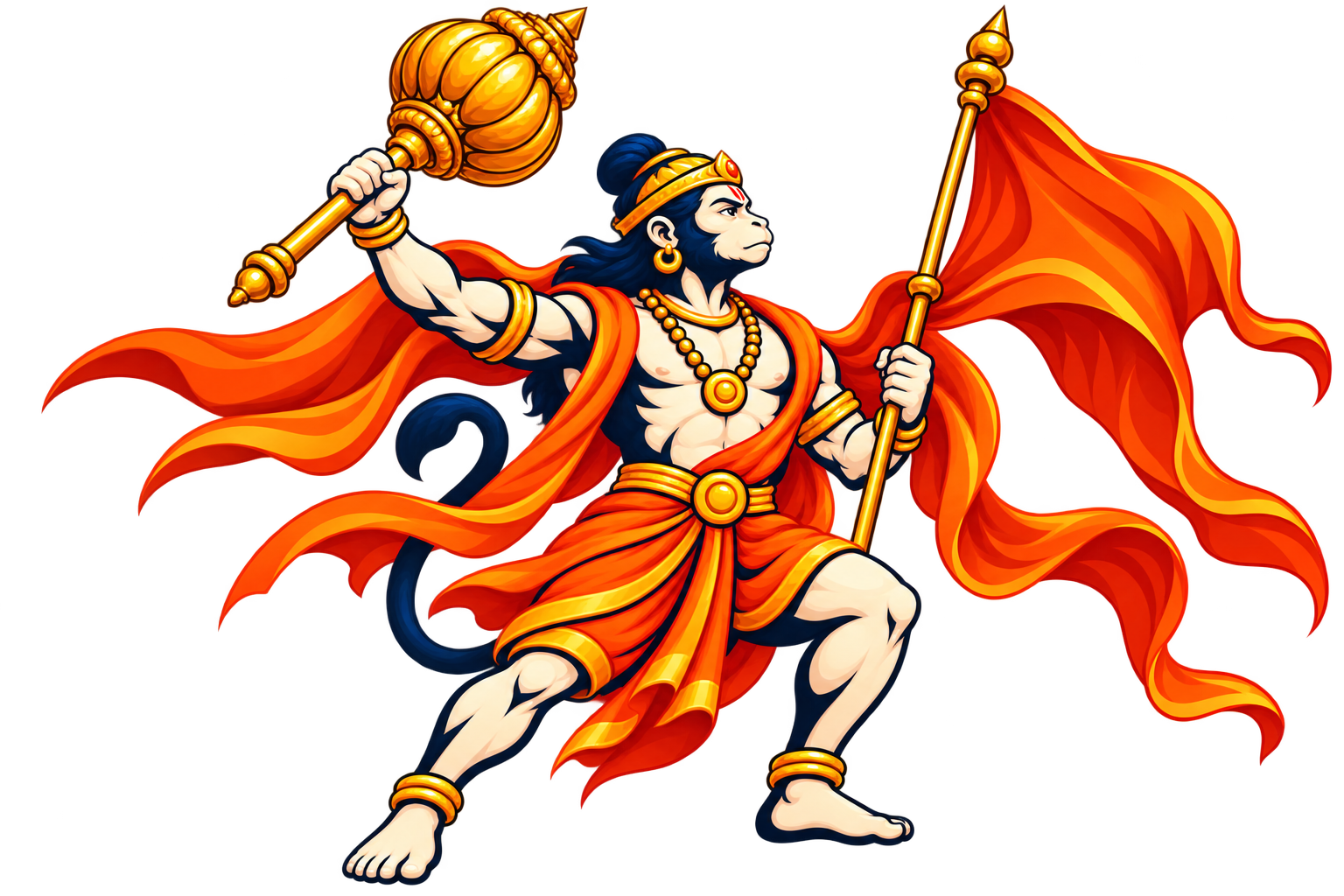
हाथ बज्र औ ध्वजा बिराजै
A thunderbolt in one hand and the flag of dharma in the other.-Hanuman Chalisa
My mission is to build ventures that address the needs of the underprivileged, while binding myself and my work to the tenets of Dharma.
Principles
The principles guide everything. These principles are simple, yet difficult to follow. They require discipline, focus, and a settled mind. They are a circular system where each principle feeds into the next. This process is continuous and never ending.
Some companies have a lot of principles such as Bridgewater or Amazon, but those are overkill and lead to confusion. It is hard to keep in mind a ton of principles while also trying to perform the work in that business. So the niti are distilled down to four core principles: Serve, Standardized Processes, Uncover Waste, and Continuously Improve.
We use either a Lean Six Sigma or Agile method as needed. The way I see it Agile is a way of discovering something unknown. It is a discovery method, the end result of which is a discovery of a process. This process can then be optimized with the tools of a Lean Six Sigma process. Lean Six Sigma is also useful in cases of known outcomes. Where throughput and quality are needed such as specific known deliverables with a known process.
The following four principles have been gathered and distilled from these sources:
- W. Edwards Deming
- Lean Manufacturing / Toyota Production System
- Six Sigma
- Working Backwards from Amazon
- Agile Software Development
Serve
O Arjuna!
As the ignorant men work with attachment to action,
so should the wise act without attachment,
for the welfare of the world. -Bhagavad Gita 3:25
They alone live, who live for others, the rest are more dead than alive. -Swami Vivekananda
Build to serve others. Innovation is when you figure something out and make it applicable to others, a form of serving. Building things for their own sake without a purpose of who it is serving is useless. With a Customer, Partner, Team, or Self in mind, innovate to to serve.
- Customers. Build products and services that serve customers. Solve their problems and make their lives better. The way to do this is to deeply understand the customer's problems and needs. This requires empathy, listening, and observation.
- Partners. Whether it is a life partner or business partner they need to be served just the same. Figure out what they need and how you can serve them and make their lives better. Become a preferred partner, someone people like to work and get along with.
- Team. Serve your team members, employees, and colleagues. Help them grow, develop, and succeed. Create a positive environment where people feel valued, respected, and appreciated.
- Self. Serve yourself by becoming a better person. This is not selfish, but rather a way to be able to serve others better. Take care of your physical, mental, and emotional health. Continuously learn, grow, and develop yourself.
Serving is not a one way door. If done well both parties benefit and grow. When serving there are three things to keep in mind:
- Specific Mission. Who are you serving and what problem are you solving for them? Make it specific and clear and easy to communicate. Anything vague is is hard to serve, a specific mission makes it easy to focus efforts.
- Single Threaded Owner. Have a single person who is the owner of a process and who can make decisions, run the process to drive the mission forward.
- Measurable Output. How do you measure success in serving them? Have a clear outcome in mind and track progress towards that outcome.
PRFAQ
We use a PRFAQ to narrow down our focus and ensure that we are addressing the correct problem. The PRFAQ invented at Amazon provides a means of critical thinking a problem with the focus on the customer. It works for most situations.
7Powers
The 7 Powers is a means of improvement that leads to delivering better value to the customer.
Standardized Processes
Standardized processes across everything. Slinging guns may be great for a lone wolf, but to build anything great requires systems and processes with clear outcomes. These systems can be either in personal life or business. Have a set of standardized processes that are followed to achieve Measurable Outputs. A monk like scheduled life is a great example of standardized processes in a personal life. A set of documented business processes is a great example of standardized processes in business.
Every standardized process's goal is to achieve a specific Measurable Outputs while Serving. Outputs result based on the appropriate inputs. Trying to manage outputs without changing the inputs is impossible. So focus on the inputs, the processes, and the systems to achieve the desired outputs. These input processes should be continuously monitored with charts and graphs to make it easier to understand.
Every standardized process has these characteristics:
- Documented. The process is documented in a clear and concise manner. This documentation is easily accessible to everyone involved in the process.
- Repeatable. The process can be repeated multiple times independently of the individual.
- Measurable. The process uses control charts to measure outcomes. These metrics are tracked and monitored to ensure the process is working as intended leading to the desired Measurable Outputs.
- Owned. The process has a clear owner who is responsible for ensuring the process is followed and improved upon.
People
The following books are a core reading to have a standardized language for the company. Each addresses a different part of the company.
- Toyota Way
- 7 Powers
- The Goal
- Financial Intelligence for Entrepreneurs
- Spin Selling
Stack
We have a common stack of technologies and processes we use for whatever business we use. These are external tools and services that make our life easier.
Uncover Waste
Perfection is achieved, not when there is nothing more to add, but when there is nothing left to take away.
Antoine de Saint-Exupéry
Entropy is a Law of Nature, every system produces waste. Waste is anything that doesn’t serve the purpose of Serving! Waste can be in the form of time, money, energy, resources, etc. Waste leads to inefficiencies, stress, loss of quality, and a loss of a settled mind.
Anything that doesn't lead to the improvements of the Measurable Outputs is waste.
Waste can be identified by tracking it. We build systems where any waste whatsoever is tracked, prioritized and addressed. Further, waste is a way to empower our team. By giving our team the ability to identify waste, we empower them to improve the system and help those who we serve.
These are some common types of waste:
- Defects. Errors, bugs, rework, failures, misunderstandings.
- Overproduction. Making more than needed or earlier than needed (extra features, unnecessary outputs).
- Waiting. Idle time when people or systems wait (blocked work, slow approvals, slow CI).
- Non-Utilized Talent. Underusing people’s skills, knowledge, creativity (manual tasks engineers shouldn’t do).
- Transportation. Unnecessary handoffs or transfers between people, teams, systems (Dev → QA → Ops loops).
- Inventory. Work-in-progress that isn’t delivering value yet (open PRs, backlogs, half-finished work).
- Motion. Unnecessary movement or context switching (searching for info, tool hopping, interruptions).
- Extra Processing. Doing more work than necessary (over-engineering, excessive documentation, duplicate checks).
The common ways to fix waste is by the 5S method:
- Sort (Seiri). Identify all items in the space (physical, digital, or process steps), tag anything unused or rarely used, remove obsolete tools, files, steps, or equipment, Archive items needed only occasionally, Eliminate duplicates
- Set in Order (Seiton). Arrange items for easy access and retrieval, Label storage locations, Create visual cues for organization, Ensure tools and materials are in designated places
- Shine (Seiso). Clean the workspace regularly, Remove dirt, clutter, bugs, or code debt, Fix broken tools, configs, scripts, Schedule routine cleaning tasks
- Standardize (Seiketsu). Create SOPs, checklists, and guidelines to maintain organization and cleanliness, Establish routines for sorting, setting in order, and shining
- Sustain (Shitsuke). Maintain discipline to follow 5S practices consistently Conduct regular audits to ensure adherence, Foster a culture of continuous improvement
Issues
Continuously Improve
Please do the most unpleasant tasks first unless there is some pleasant thing, which also has to be done that day. In time, you will find that you have peace of mind. You have more leisure, inner leisure. Procrastination is the villain of the piece in taking away that inner leisure. Inner leisure gives you the space to pay attention to those whom you love, and for whom you work so hard. You want to give them a good, comfortable life. Inner leisure gives you the space to spend quality time with your spouse, with your children, your parents, and your siblings. When you are with your spouse, you are with the person totally, absolutely totally. With the pending problems and files inside the heart, you cannot do that because you are not total.
-Swami Dayananda Saraswati, Need for Personal Reorganisation
While standardized processes are nice as a baseline, the world doesn’t stand still and the environment changes. So every process must be continuously improved. With a 1% improvement every day, over time these small improvements lead to significant gains.
Continuous improvement is lead by the owner of the standardized process. There are a few ways to continuously improve a process:
- Experiments. Try new things and see if they lead to better outcomes. Use a scientific method approach to test hypotheses and validate assumptions.
- Failures. If there is a failure, we learn from that failure and improve the process to avoid that failure in the future. This happens through root cause analysis and postmortems.
- Upstream. All processes have upstream dependencies whether it is a customer, partner, or team member. We monitor these upstream dependencies for changes and improve our process accordingly.
- Downstream. If there is a downstream improvement and there is a way to improve our process to take advantage of that downstream improvement we do so.
The way to track continuous improvement is through metrics and control charts. Every process should have a set of metrics that are tracked and monitored. These metrics should be used to identify areas for improvement and track progress over time.
Charts
Control Chart
Usage
6-12 Chart
Usage
Pareto
Usage
Work
The world is being reshaped and the new world order is being birthed. Until 2040 there will be chaos and disorder as the new world order takes shape. This disorder will result in quite a few changes. The world is headed toward the Rebirth of the American Republic, Greater Israel and Bharat as the new Powers.
-
American Republic
The American Empire is at its apex, but it is also starting to fail like the British Empire before it. The country has immense debt, social conflicts, wealth inequality and techno-feudalism as driving forces. Externally, the rise of BRICs including the manufacturing power of China, military power of Russia and Israel, and India’s white collar power creates alternates to America.
When the American Empire collapses the American Republic will be reborn. Like all collapses it will trigger a realignment. The existing parts of the empire will transfer to new powers, and America itself will go through massive upheavals.
Once this happens I believe that United States will reject its old identity and will build a new foundation on either a Catholic or Yoga foundation.
-
Greater Israel
Israel has a goal of Greater Israel and that this will happen. It won't be pretty and Israel will piss off a lot of countries, but it will happen. Unfortunately, for this to happen will require the collapse of the American Empire. As part of this Israel and Bharat will become closer. Israel will use Bharat as its manufacturing base and there will be mutual development of technology.
-
Bharat
India will shed its secular identity and will be reborn as Bharat, a Hindu Republic. It is only when this happens that it will march forward with a singular identity into the world. The irony of this situation is while the West will become more dharmic, India will become more Abrahamic as it consolidates its Hindu identity into a structure similar to that of Christianity and Islam.
Once this has happened and Bharat fully embraces its Dharmic identity it will move to spread that identity in a peaceful manner. This along with the wealth it will generate will lead to a realignment. What this means also is that Bharat may not be an economic power per se, but a strong military one.
Will there be losers in this new world? Of course. No new world order emerges without losers and I believe that the two biggest losers will be China and Islam. China will lose because it is running out of people and is aligning itself with destabilizing elements. Islam will use because most Islamic countries are dependent on a globalized world where food and resources can be moved to areas that can't support the number of people that they contain. Either way, these regimes will struggle. Whether, this is correct or not is not for me to judge but what I see as the movement of converging forces.
opsZero
April 2016 – Present — CEO / Founder
- Started a DevOps consulting firm that has setup and migrated Kubernetes infrastructure for startups.
- Focused primarily in the healthcare, finance and enterprise space with high compliance requirements.
- Companies we have worked with include PicnicHealth, Lattice, Posthaven, Emburse, Akido Labs, Bridg, Envkey, Floydhub, HumanInterest, TractionGuest, Riviera Partners, and Counterpart.
- Implemented sales strategy and processes to grow company repeatably.
- Setup Quarterly OKRs and Weekly Sprints to attain KPIs.
- Manage team which includes sales, coding, finance and administration.
- Completely bootstrapped and has been remote first from the beginning.
- Spent 2020 building internal software to create repeatable processes to scale company execution.
- Executing on productizing this software to help other Operations and Development agencies scale.
- Executing on a Serverless Code offering focused on building code for AWS Lambda using Crowdsourcing.
Startup Sonoma County
April 2018 – June 2020 — Director / Co-Founder
- Started Co-working space in Santa Rosa, CA with two co-founders.
- Handled Government Regulations to ensure space was compliance with law.
- Handled Operations, Sales, Legal and Finance.
- Shutdown due to Covid-19 and a physical disaster at the space.
VSCO
April 2015 – March 2016 — Software Engineer (DevOps)
- Worked on the DevOps team helping to standardize deployments and infrastructure.
- Used Hashicorp tools to standardize the infrastructure.
- Used Packer to build AWS AMIs used in production.
- Used Consul to create a Feature Flagging system called Decider.
- Used Terraform to generate Infrastructure.
- Standardized on Vagrant for local development.
- Severely reduced the need for Chef by moving lot of packaging to Docker.
- Made Docker the standard packaging mechanism making it easier for DevOps to handle deployment.
- Created Custom Scripts in Go called Tacoma which standardized deployments and access to systems for all engineers.
- Standardized deployment of Machine Learning models via Caffe.
- Implemented Linux server optimizations to handle high traffic while reducing costs.
- Scaled MongoDB to handle high traffic.
Lookout
February 2012 – April 2015 — Senior Software Engineer
- Built tooling around Vagrant to help speed up local development.
- Worked in Chef to bootstrap staging environments for a new Enterprise product.
- Built tooling around Storm to improve visibility into operational issues.
- Contributed to code reviews and agile issue triage.
- Worked on the billing team incorporating carrier payments into a Rails backend.
- Helped structure the codebase to support multiple payment backends generating tens of millions in revenue.
- Helped separate a monolithic Rails application into a dedicated billing service.
- Acted as a liaison between engineering groups including Operations and Core Infrastructure.
- Collaborated with carrier developers on integrations.
- Contributed to multiple hackathons resulting in patent filings.
- Helped grow the team from three members to ten members.
- Recruited and mentored interns.
SpeakerText/Humanoid
June 2011 – January 2012 — Software Engineer
- Hired as engineer #2 to work on the Rails backend for a crowdsourcing application.
- Introduced engineering processes around Git branching and issue tracking.
- Created the REST API used by customers to submit crowdsourcing tasks.
- Helped implement a workflow engine for arbitrary crowdsourcing tasks.
- Built worker metrics infrastructure using MongoDB and Redis.
- Mentored four summer interns.
- Built administrative interfaces for workers, customers, and tasks.
- Helped create worker feedback and happiness processes.
CloudCrowd
October 2010 – May 2011 — Software Engineer
- Developed finite-state-machine and workflow systems for a crowdsourcing platform.
- Worked on Ruby on Rails and Sinatra applications using DataMapper.
- Wrote automated tests using RSpec and Cucumber.
- Focused primarily on the Serv.io product line.
- Worked within a small agile team shipping weekly releases.
Plutoz.com
March 2010 – July 2010 — Lead Developer / Consultant
- Developed an ecommerce search and recommendation engine.
- Configured a 20-node Nutch/Hadoop cluster using Puppet.
- Built a Ruby on Rails application for managing crawl infrastructure.
- Created a distributed crawler using Cassandra and Redis.
- Built Hadoop jobs to populate a sharded Solr cluster.
- Extended Solr query scoring with custom parsing.
- Migrated legacy PHP applications to Rails running on JRuby and Java.
- Deployed applications using Tomcat and nginx.
- Led developers across the U.S., India, and Vietnam.
i5labs
December 2007 – November 2009 — Web Developer / Consultant
- Solved Internet Explorer CSS and JavaScript compatibility issues.
- Contributed components to the Radiant CMS ecosystem.
- Modified ZXing-based iPhone applications for QR code ticket scanning.
- Built recruiter-performance analytics software for Riviera Partners.
- Reverse engineered Maxhire CRM integrations.
WordNetworks
July 2007 – August 2007 — Intern
- Prototyped textual analysis software using Erlang and Mnesia.
- Created Amazon EC2 operating system images.
Berkeley Law
October 2006 – October 2007 — Student Web Application Developer
- Developed web applications for event coordination and student examinations.
- Refactored and extended legacy codebases.
University of California Press
October 2005 – November 2006 — Tech Assistant
- Built an intranet by heavily customizing ExpressionEngine.
- Developed Python automation tools for Information Systems and Helpdesk teams.
Study
I want a Liberal Arts Education in Sanatana Dharma (Hinduism) like there is in the West. But the Hindu knowledge system is so vast and the traditions cover so many things that it is a bit overwhelming if someone was not born into it or was unfamiliar with the different tradition systems. Having been raised in the West and rediscovering my Hindu identity there was no track on how to go about this.
This leads to confusion because the very nature of what being a Hindu changes from one person to another. While this choose your own adventure nature of Santana Dharma is wonderful as we are not bound by a singular path, it also causes confusion for the diaspora. We may go to a temple and pray but we may not know the deeper meaning behind the prayer. We may not even know who the devas are except vague understandings. Furthermore, each YouTube guru teaches according to their tradition Vedanta, Yoga, Tantra, etc. and if we read western writers their perspective is almost entirely on the Vedanta-Yoga systems without any real coverage of the Bhakti based systems that most Hindus grow up in. All of this leads someone coming to Hindu dharma to be confused as to where to start.
After reading and practicing and reading and misunderstanding and practicing some more I have come up with a curriculum that provides an 80%, non-sectarian understanding of what it means to be a Hindu. In Sanatana Dharma the community/parabrahman are the four goals of life: Dharma, Artha, Kama, Moksha that is duty within society, wealth, pleasure, and liberation. A common basis of a Sanatana Dharma Liberal Arts Education should be based on the purusharta as these are the four goals of life.
Furthermore, Indic thought does not live in isolation and it never has. A bridge needs to be built from Dharmic thought to Western thought. As much as Hindus like to boast our ancient culture we have been influenced by Western thought for millennia whether it was Alexander, the Roman Empire, Islam, or the British. We have in return significantly contributed to those thoughts as well. I believe the best ideas of Western civilization should be incorporated and reformulated within Dharmic thought.
There are only four sastras to study as a Hindu and put into practice for the rest of one's life. If nothing else is read on Hindu dharma and you only have patience for a few texts these would be it.
- Hanuman Chalisa. Devotion and Service. What it means to be serve Isvara. I would further state that if there is only one text in Hindu dharma to study this would be it. Hanuman embodies what it means to be a devotee of Bhagavan. If we can embody him and live as selflessly as he did then we will have fulfilled dharma.
- Yoga Sutras of Patanjali. Practice of Yoga. The astanga system provides the framework for putting the other three texts into practice. Ironically, this text is the one most Westerners turn to but is relatively unknown within the Hindu community.
- Bhagavad Gita. Understand of Yoga. Understanding Karma, Bhakti, Raja and Jnana Yoga and messy reality of life. While this covers all the purusharta, I do think it speaks to artha in terms of Arjuna being a warrior and fulfilling his dharma even when life is messy.
The Foundational texts express the goal and practice of a Hindu. However, though the Bhagavad Gita covers a portion of this these texts don't cover the larger Hindu though process which is that we live in an imperfect world. Most of us are likely not striving after moksha but money, pleasure and power. While gurus and swamis cajole us to the path of moksha the paths of dharma, artha and kama are all important pursuits of life.
Traditional Hindu thought understood this and said that there are four goals of life, the purusharta. These are duty in society, wealth, pleasure and liberation. A core reading of the full Mahabharata and Ramayana which encompasses the entire thought process is thus vital to understanding this.
Lastly, Hindus don't live within a vacuum and with Islam and the British a new current of thought was established within India. Vivekananda, Aurobindo, Hedgewar were all educated and understood Western thought. It is because they understood the thoughts that they were able to create what constituted the Hindu identity.
While an extensive Liberal Arts textual workload is out of the question. I again wanted to choose a few core texts that fit the 80% rule. Here I also include studying Vivekananda and Ramakrishna who have had a profound influence of modern Hinduism.
- Dharma
- Ramayana. The essence of an ideal man and woman, Rama and Sita. The ideal of an ideal devotee, Hanuman. The power of ignorance, Ravana. The messiness of culture and duty. Love of one's wife!
- Mahabharata. The messiness of life and karma. The unfairness of dharma. The futility and sorrow of war.
- Swami Vivekananda Complete Works
- Vivekananda Volumes 1
- Vivekananda Volumes 2
- Vivekananda Volumes 3
- Vivekananda Volumes 4
- Vivekananda Volumes 5
- Vivekananda Volumes 6
- Vivekananda Volumes 7
- Vivekananda Volumes 8
- Vivekananda Volumes 9
- Artha
- Panchatantra. Moral stories for how to be a good leader for children.
- Chanakya Neeti. Collected thoughts of Chanakya.
- Arthasastra. Political power and an ideal Hindu kingdom.
- Kama
- Moksha
- Bhakti/Jnana
- Hanuman Chalisa
- Shiva Puranas
- Gospel of Sri Ramakrishna
- Dancing with Siva
- Living with Siva
- Merging with Siva
- Bhagavad Gita
- Bhagavad Gita Book 1 by Swami Dayananda Saraswati
- Bhagavad Gita Book 2 by Swami Dayananda Saraswati
- Bhagavad Gita Book 3 by Swami Dayananda Saraswati
- Bhagavad Gita Book 4 by Swami Dayananda Saraswati
- Bhagavad Gita Book 5 by Swami Dayananda Saraswati
- Bhagavad Gita Book 6 by Swami Dayananda Saraswati
- Bhagavad Gita Book 7 by Swami Dayananda Saraswati
- Bhagavad Gita Book 8 by Swami Dayananda Saraswati
- Bhagavad Gita Book 9 by Swami Dayananda Saraswati
- Raja
- Bhakti/Jnana
Languages
- English (Native)
- Telugu (Native)
Patents
- US 20140128047 A1 — System and method for call blocking and SMS blocking
- US 20140349625 A1 — System and method for mobile communications blocking based on crowd sourced information
Education
- University of California, Berkeley. History, B.A. August 2005–May 2010